

My Journey Through Bolivia and Its Silver Coinage
In June 2025, my father and I traveled to Bolivia, visiting La Paz and Santa Cruz. My father is also a numismatist, and we share a passion for art, history, and coins.
During our trip, we had the opportunity to meet some interesting people who shared those same interests. We spent time with fellow collectors, enjoyed meals together, exchanged stories, and had the chance to see different collections. It was a great way to experience the local culture while learning more about Bolivia’s numismatic history. We also had the opportunity to acquire several Bolivian silver coins for my collection.
What made the trip particularly interesting was discovering more about Bolivian coinage, especially the macuquinas, or cob coins, and the silver 8 Reales minted in Potosí. Seeing these coins firsthand and speaking with collectors who had spent years studying them encouraged me to learn more about their history, varieties, and how they were produced.
A Piece of Potosí I Still Keep
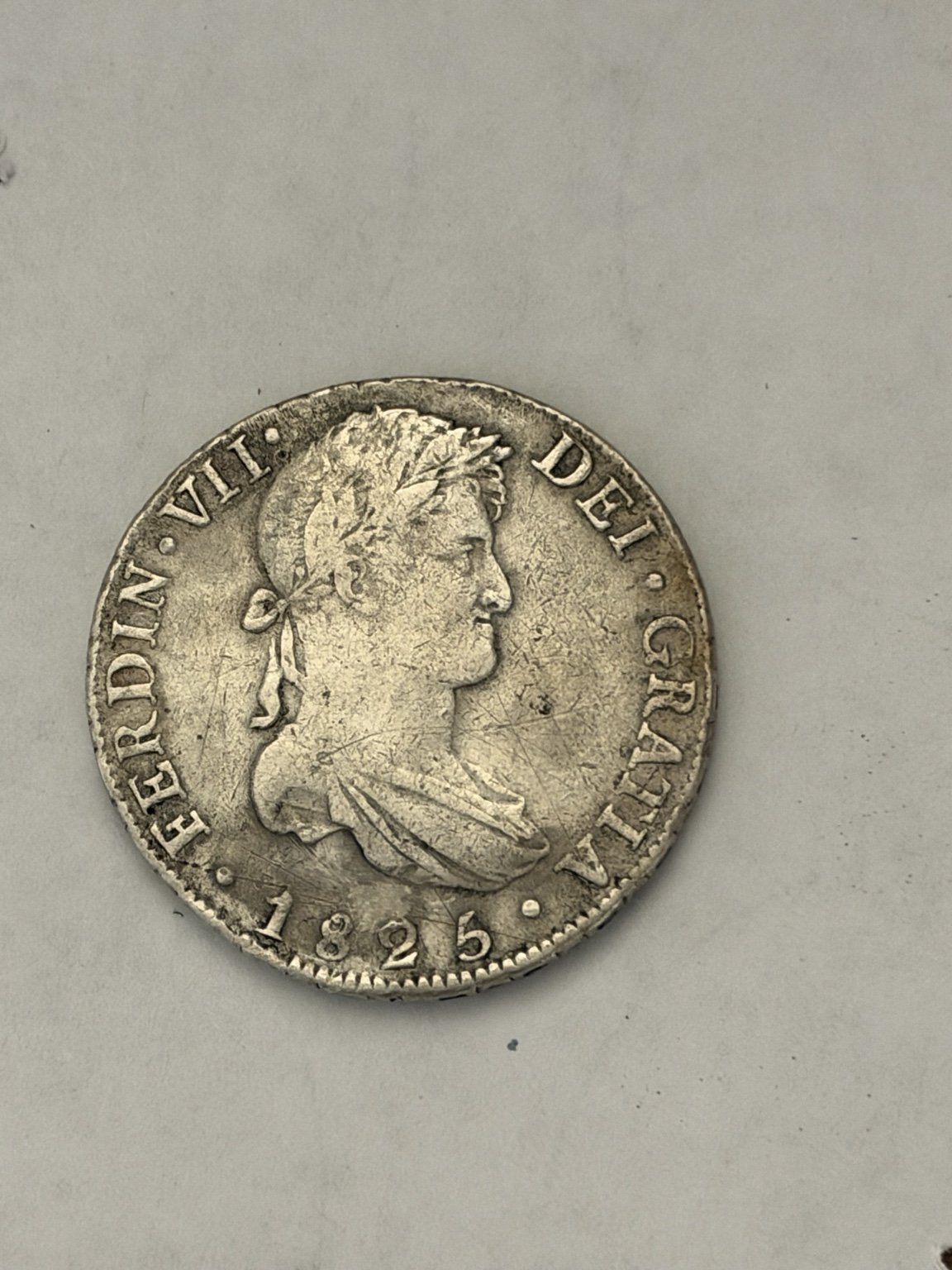
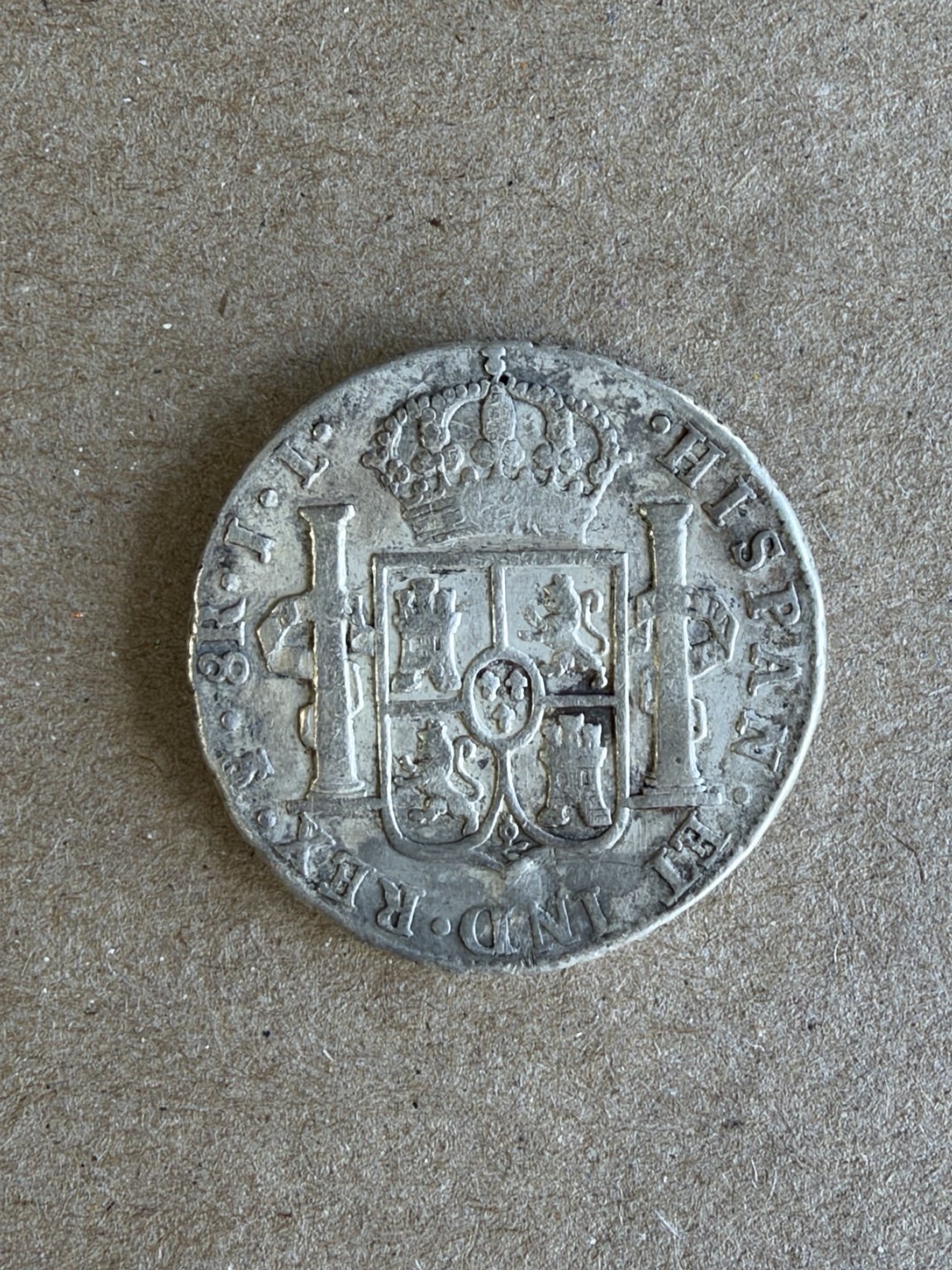
Among the coins I brought home was an 1825 Potosí 8 Reales of Ferdinand VII, with the assayer initials J·L. It weighs 26.78 g. It is well circulated and struck on a compact planchet. Although it shows considerable wear, it is a piece I value for its history and the memories associated with that journey.
It may have come from an old tapado—a hidden or buried cache—but I do not have evidence to confirm that. Its history before I acquired it remains unknown.
Potosí and Its Silver
The silver deposits of Cerro Rico helped make Potosí one of the great mining centers of the Spanish colonial world. The city’s mines, mills, and Royal Mint formed part of an extensive system of silver production. That history also depended on the labor of Indigenous communities, including forced labor under the colonial mita.
The macuquinas that caught my attention belong to an earlier tradition of hammered coinage. Their irregular shapes, incomplete legends, and uneven strikes make each piece different. The 1825 coin shown here is a later portrait 8 Reales, rather than a cob. The two belong to different stages of Potosí’s coinage, and studying them together has helped me understand how the mint’s production changed over time.
An Interest That Continued Beyond the Trip
The trip sparked a deeper interest in Bolivian coinage, especially macuquinas and the silver coins minted in Potosí. It encouraged me to study their history, how they were produced, and the different varieties found in Bolivian silver.
I am still learning about these coins and building the collection. Looking closely at a mintmark, an assayer’s initial, or a detail in a die often leads to another question. The conversations we had in Bolivia gave me a starting point, and the coins continue to give me reasons to look further.
From my personal collection — Collectorly
Research and Further Reading
UNESCO World Heritage Centre — City of Potosí: City of Potosí
American Numismatic Society — Coinage of El Perú (1988), including research on the early Potosí mint and its assayers: ANS study
Daniel Frank Sedwick — The Practical Book of Cobs: The Practical Book of Cobs
Like this coin? It stays in my collection, but you can browse the 8 Reales available now: Shop 8 Reales →
Photographs: Personal collection. Recorded weight: 26.78 g, supplied by the owner. Coin provenance prior to acquisition is unverified.
