

What I enjoy most about collecting these coins is getting to know other dealers and collectors. I’ve learned a lot from looking at coins together, asking questions, and hearing why someone sees a detail differently. Some of those conversations have turned into friendships.
I leave the exact periods and die attributions to the experts. I’m still learning, and sharing these pieces is a way to keep that conversation going.
The coins shown here are from my personal collection and are not for sale. They include a 1 Real, a 4 Reales, and two 8 Reales, one with a particularly broad flan. I’m still working toward a complete Philip II type set from Potosí under Assayer B. The ½ Real and the 2 Reales are the pieces I’m still looking for. Together, these coins offer a starting point for looking at Potosí’s early silver coinage and the issues attributed to Assayer B.
Potosí and its mint
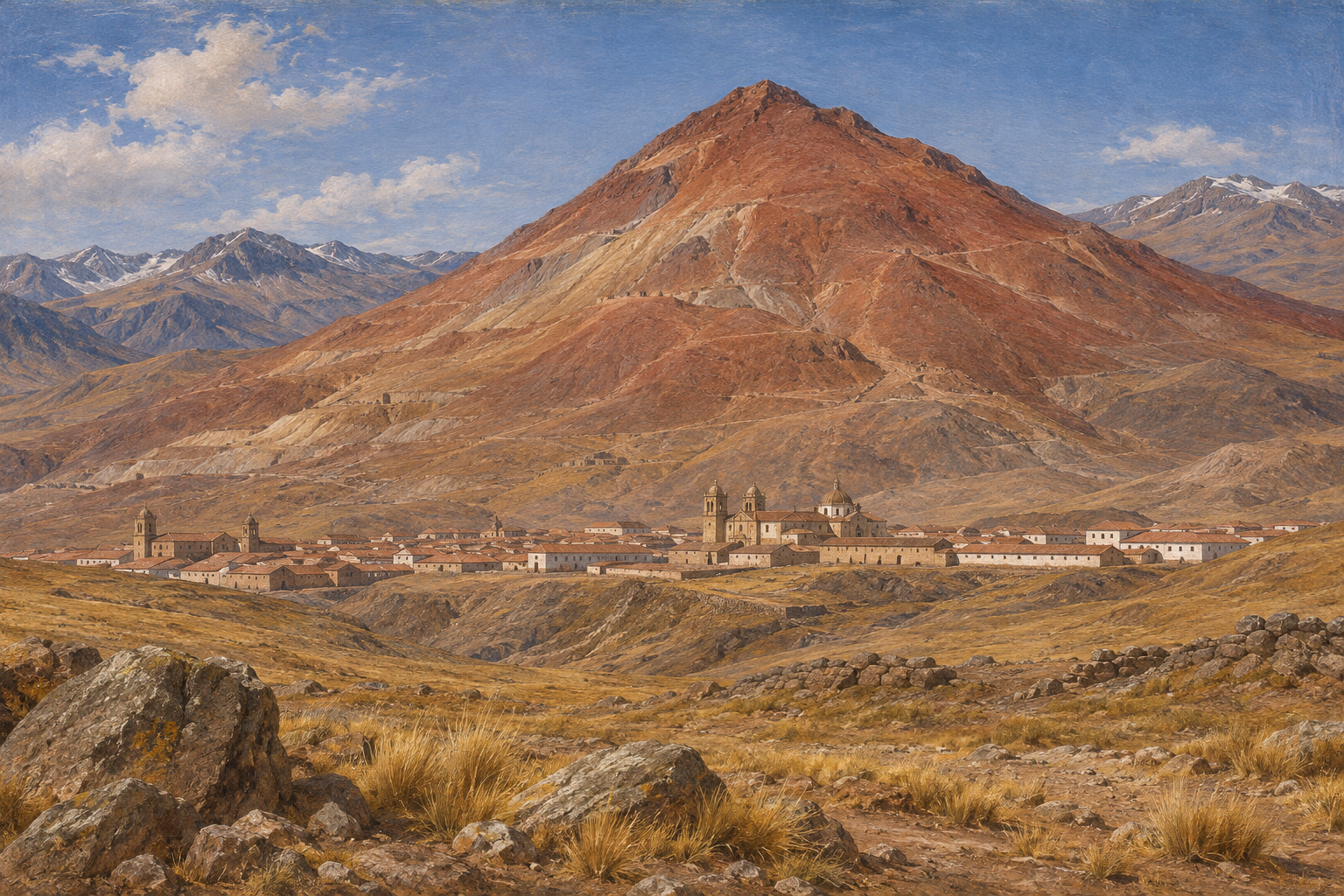
Potosí developed around the silver deposits of Cerro Rico, in present-day Bolivia. The mint began striking coins in 1574. According to the study by Robert Stallard and Daniel Frank Sedwick, its first production consisted of smaller denominations; 8 Reales were authorized in the spring of 1575.
These early issues carry a crowned shield on one side and a cross with castles and lions on the other. The designs followed the royal order of March 8, 1570, which brought the coinage of Spanish America into closer alignment with Spain’s issues.
How the cobs were made
The silver had to be prepared to the required fineness before it could become coinage. The mint’s assayer checked the alloy and adjusted it when necessary. The metal was then cast into rods from which blanks could be cut.
The blanks were struck by hand between engraved dies. An uneven blank or an off-center strike could leave part of the shield, cross, or legend outside the coin’s edge. This is one reason early cobs can be difficult to identify: an important detail may be missing even on a well-preserved example.
What the assayer did
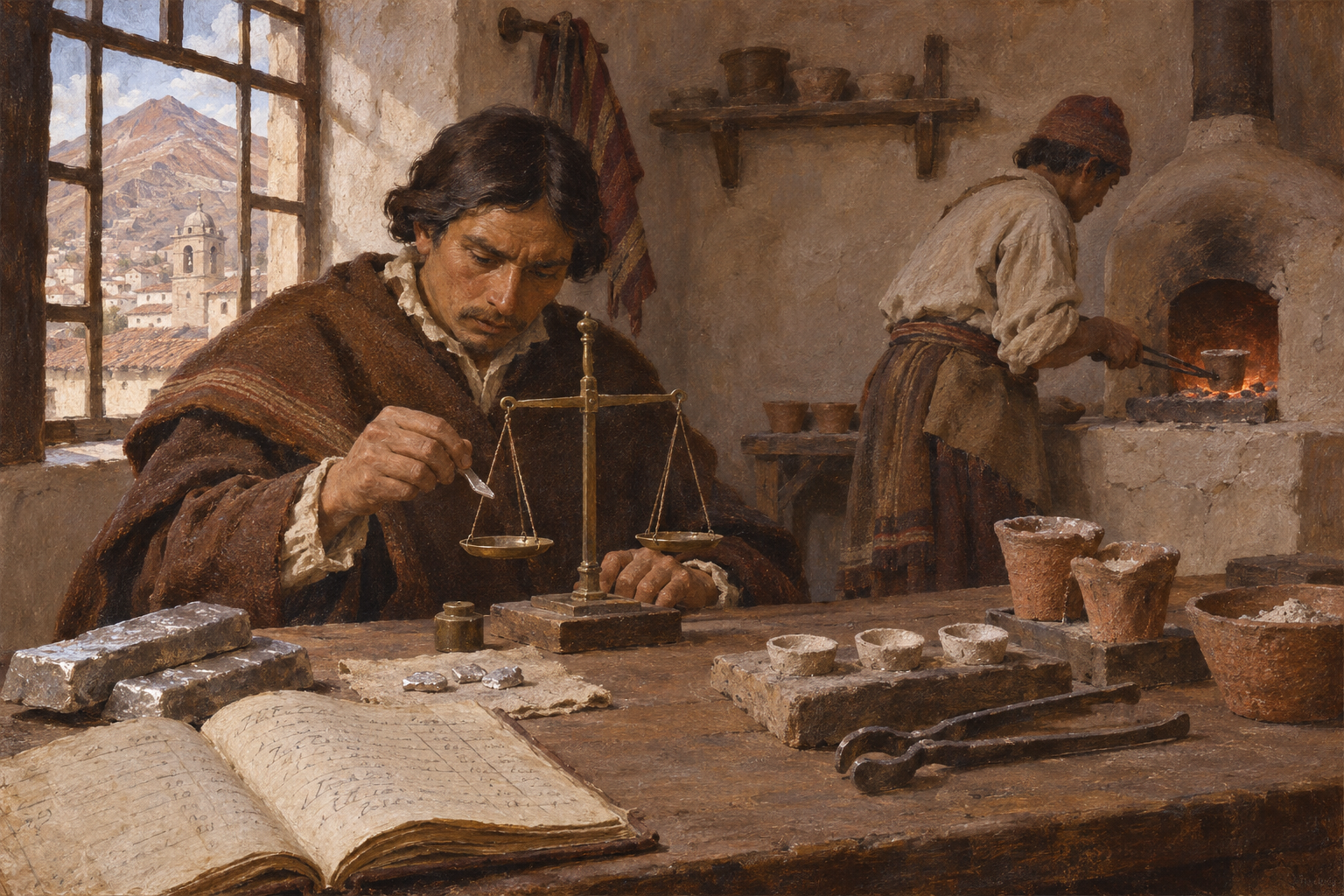
The assayer was responsible for the silver content of the coinage. This was a separate role from engraving the dies or striking the coins.
K. A. Dym’s study, The First Assayers at Potosí, makes another useful distinction: the town’s assayer and the mint’s assayer held different offices. The town’s assayer dealt with registered precious-metal production and the royal fifth. The mint’s assayer handled the metal delivered for coinage. The legal coinage standard described in the study was approximately 93.06 percent silver, with the balance copper.
The letter B
On these early Potosí issues, P serves as the mintmark and B as the assayer’s initial. Specialist literature generally associates the early B issues with Juan Ballesteros Narváez, although the sequence and precise dates require care. Stallard and Sedwick describe his service as intermittent during the remainder of the sixteenth century.
Reading a B is only the beginning of an attribution. Specialists also compare the letter punches, shield details, cross, legends, and combinations of dies. Dym’s study acknowledges unresolved questions about the early sequence and the exact dates when certain officials changed office.
These references provide historical background. They do not establish the exact period or die attribution of the individual coins shown here.
The coins in my collection
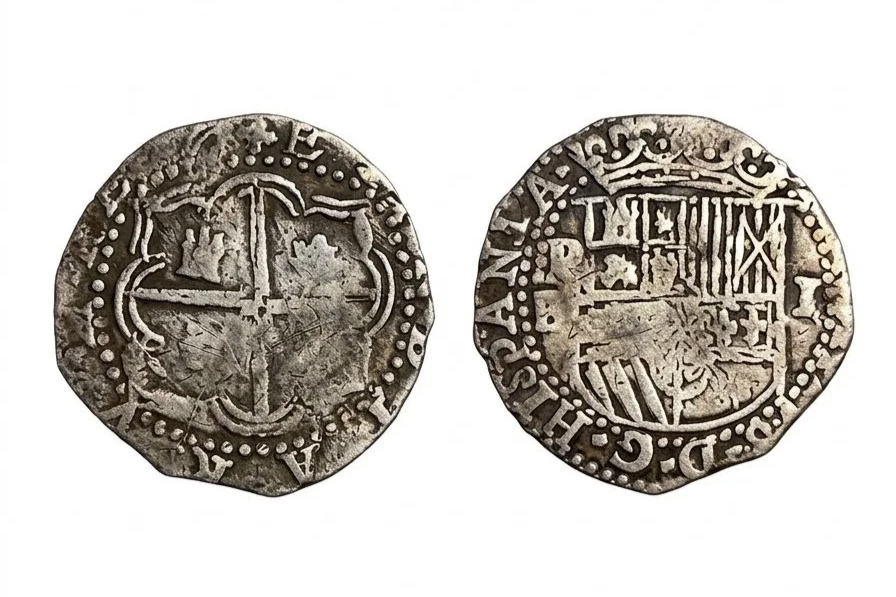
Potosí 1 Real, Philip II, Assayer B — 3.33 g. First-period attribution per Paul Karen’s ticket.
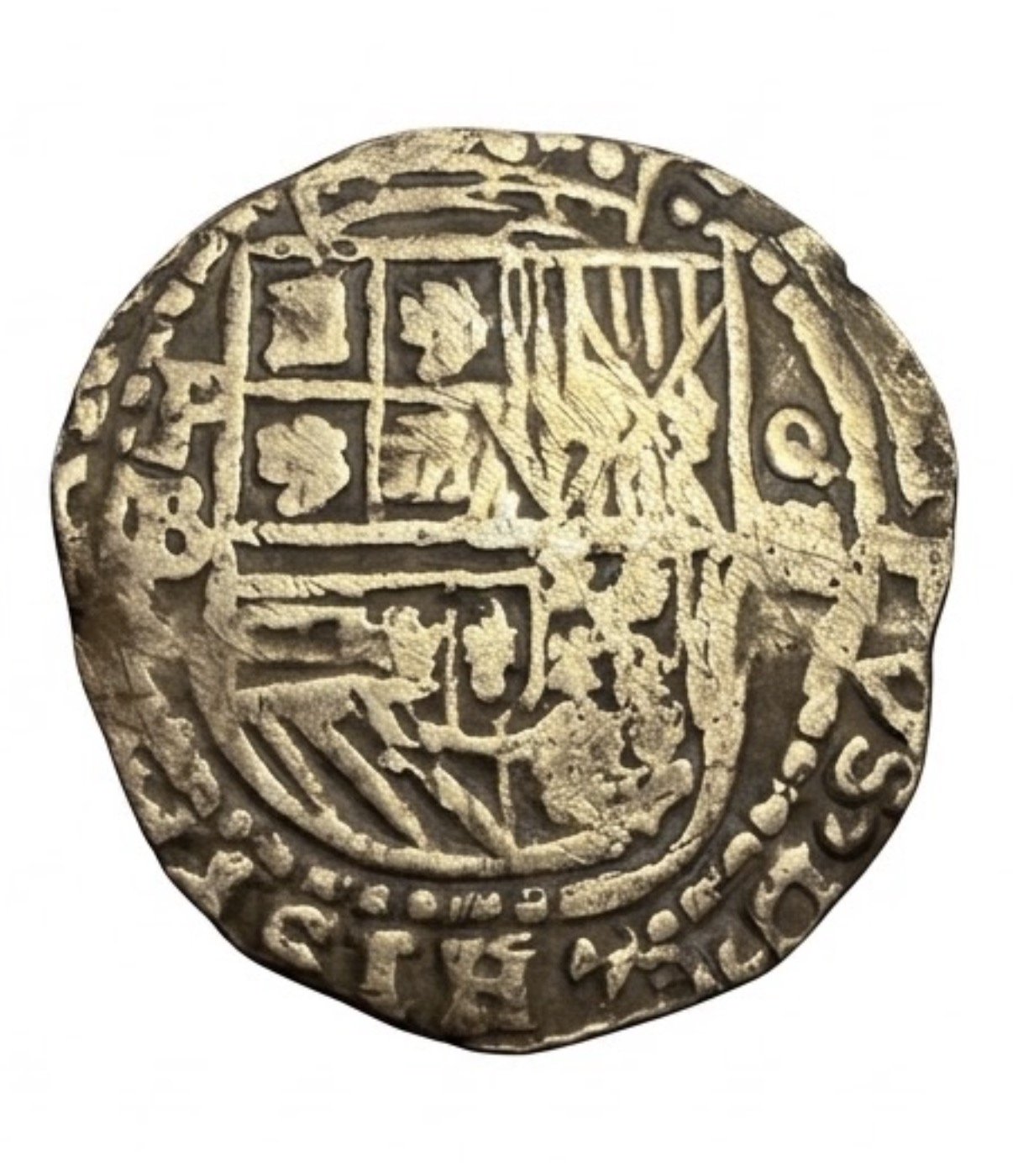
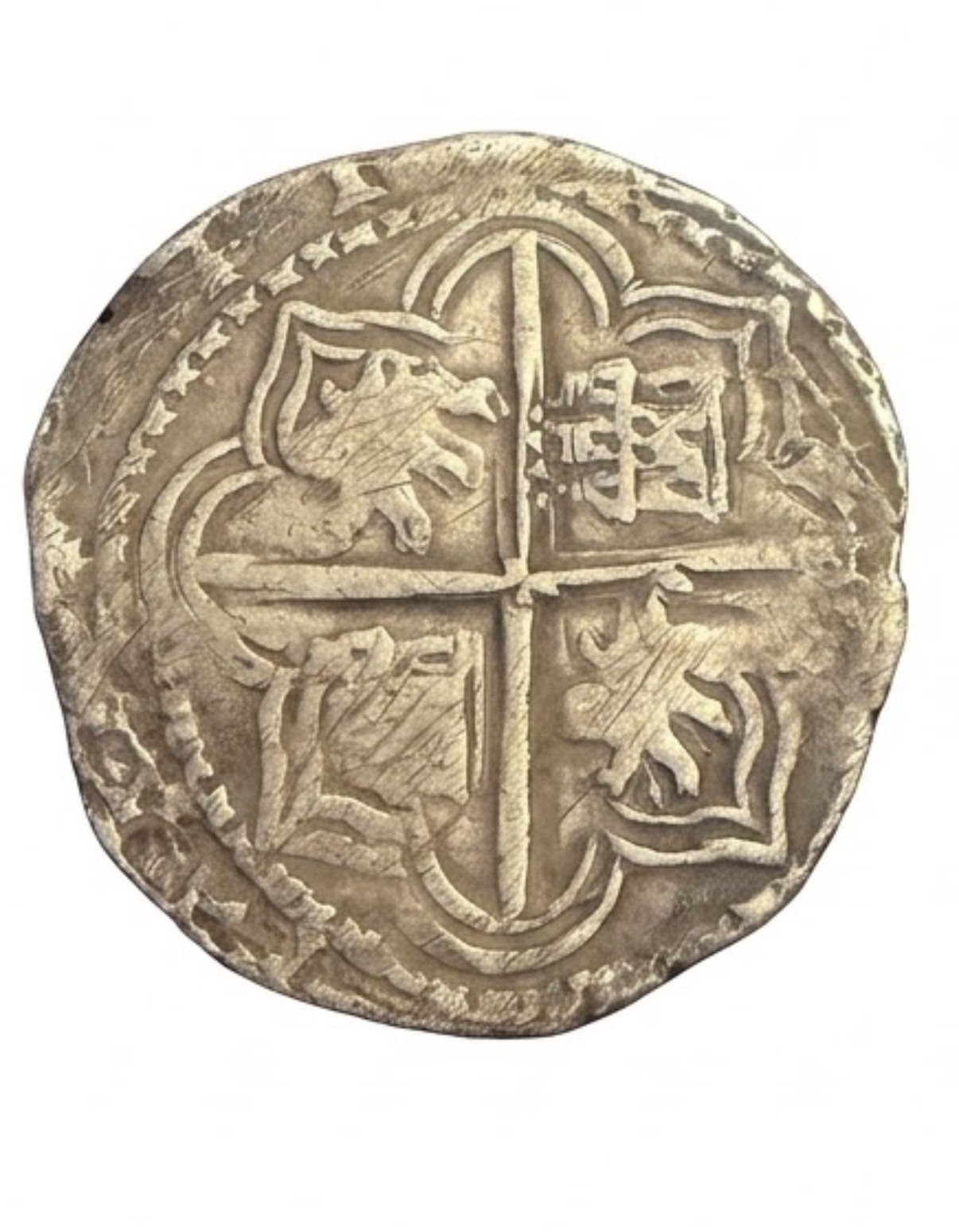
Potosí 4 Reales, Philip II, Assayer B — 13.43 g. Fifth-period attribution per Paul Karen’s ticket; Philip II remains in the legend.
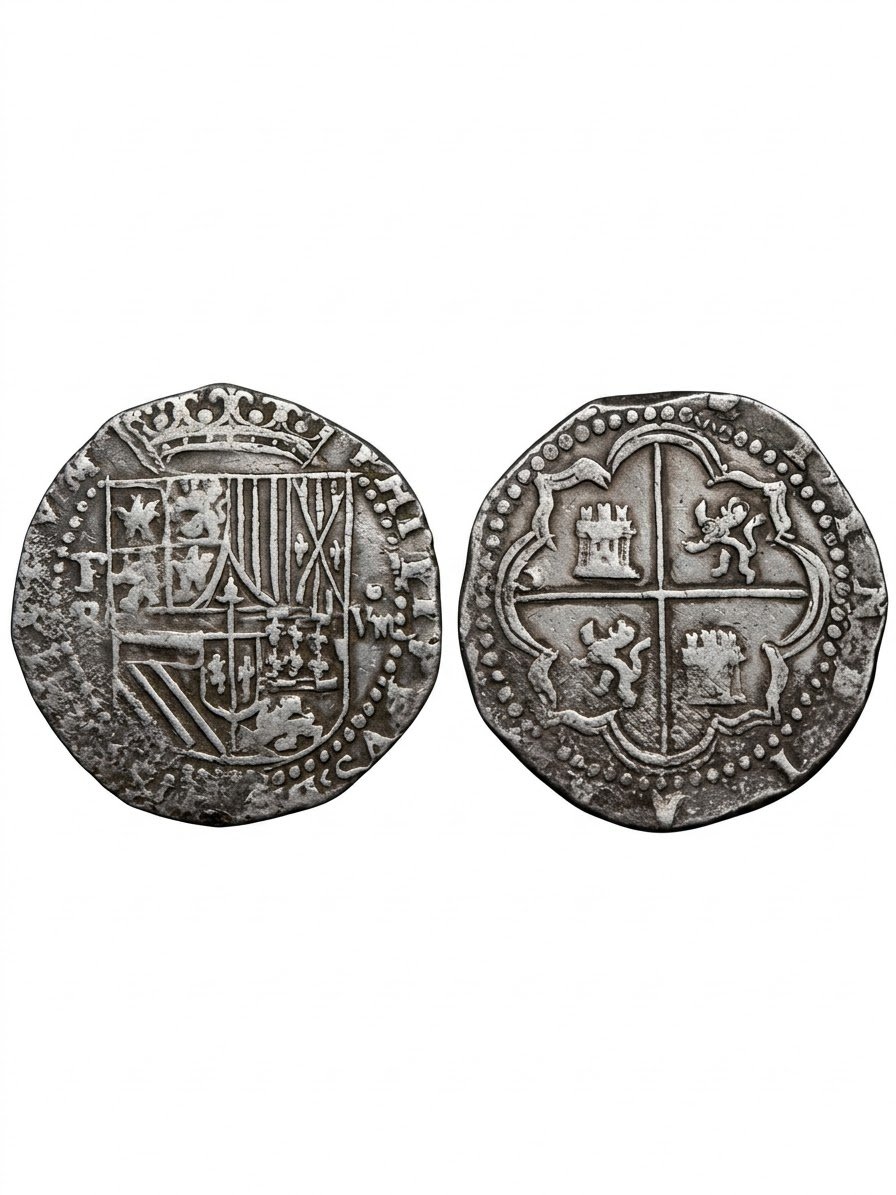
Potosí 8 Reales, Philip II, Assayer B — 27.39 g. Third-period attribution per Paul Karen’s ticket.
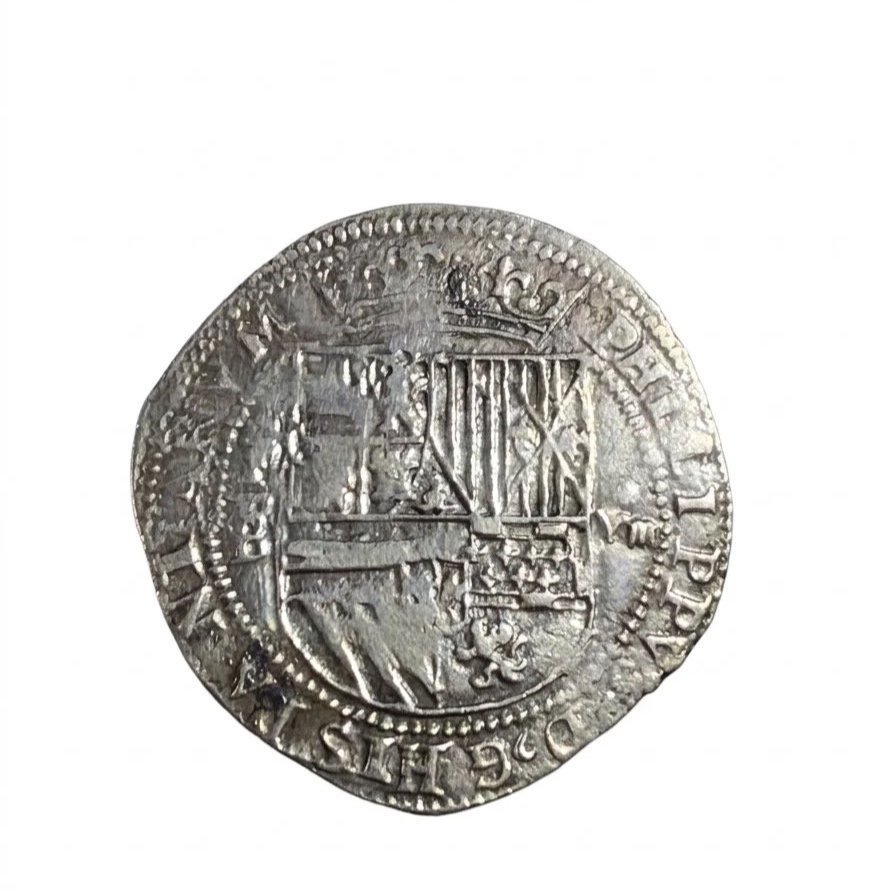
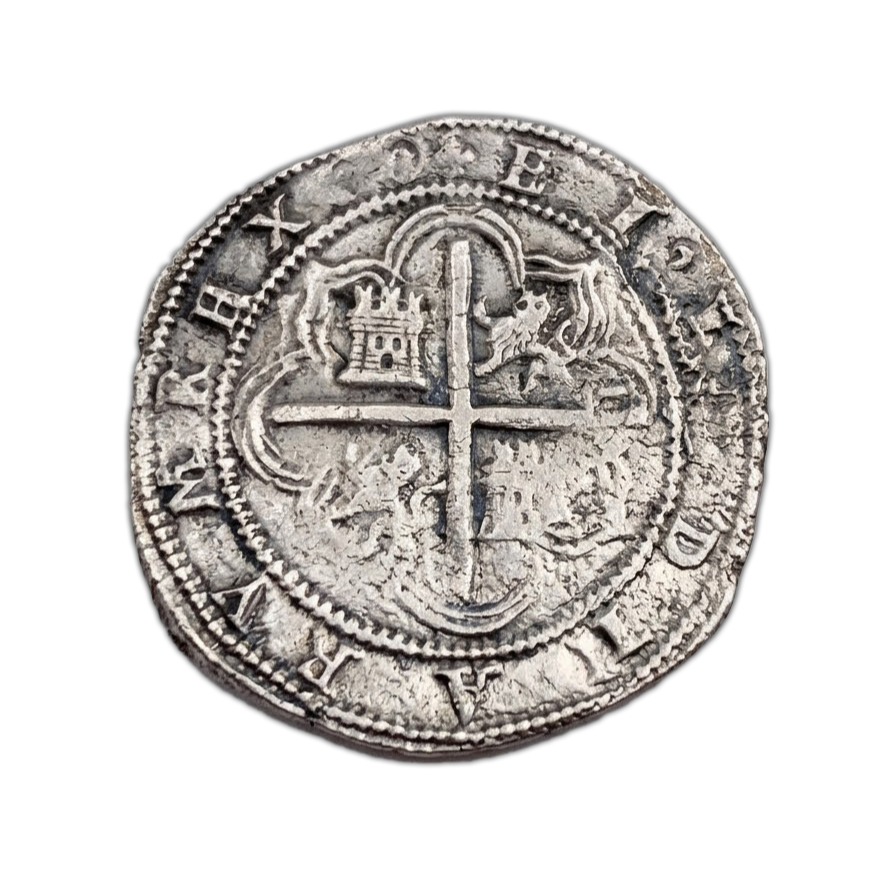
Potosí 8 Reales, Philip II, Assayer B, broad flan in Great Module format — 26.08 g. Original collection photographs: crowned shield (left); cross, castles, and lions (right).
The 1 Real came with a ticket from Paul Karen identifying it as a Philip II issue from Potosí with Assayer B. Its small surface leaves little room for the design. A surviving letter or part of the shield can be useful when comparing it with other examples.
The 4 Reales also retains Paul Karen’s handwritten ticket. Its cross, castles, lions, and lettering provide details to examine alongside the earlier attribution. Keeping the ticket with the coin preserves information that might otherwise be lost.
The 8 Reales offers more space to study the shield and cross. Comparing it with the smaller denominations helps show how the designs were adapted to different-sized dies.
The second 8 Reales has a notably broader flan and has been described as a Great Module. I use that term for its format, not as a separate denomination or a claim that it was a special presentation strike. That would require further evidence.
I’m comparing this broad-flan 8 Reales with the 27.21 g Philip II, Potosí, Assayer B second-period Great Module in Sedwick Auction 28, Lot 562, cataloged as a die match to Sellschopp #148 (Paoletti #66). My coin weighs 26.08 g, about 1 g below the 27.07 g type standard for these 8 Reales and about 1.1 g lighter than the Sedwick example. I haven’t determined whether that difference comes from clipping, wear, or the original planchet. The comparison is useful, but I have not confirmed an exact die match for my coin.
Learning from other collectors
The original photographs and Paul Karen’s handwritten tickets accompany these coins as part of their collecting history. The tickets preserve earlier attributions; exact periods and die classifications remain for specialists to assess.
For me, the best part is being able to share the pieces, listen to other opinions, and learn something I had missed. That is how the collection grows, and how many of the friendships around it began. I’m especially grateful to Paul Karen for sharing practical tips on what to look for when examining a macuquina. His incredible inventory and knowledge have helped me put this collection together, and I’ve learned a lot from him along the way.
The set isn’t complete yet. If you have a Potosí Assayer B ½ Real or 2 Reales, or know where one might be, I’d be glad to hear from you.
References
Robert Stallard and Daniel Frank Sedwick, The Rincón 1-Real and 2-Reales Coins of La Plata and Potosí—An Ongoing Study.
K. A. Dym, The First Assayers at Potosí, in the American Numismatic Society’s The Coinage of El Perú.
Ernesto A. Sellschopp, Las acuñaciones de las cecas de Lima, La Plata y Potosí, 1568–1651 (Barcelona, 1971).
Coin photographs: Gian Franco Guerrieri collection. These coins are not for sale. Earlier ticket attributions are retained as collecting history; precise specimen classifications are subject to specialist review.
