

 Image 1 of 2
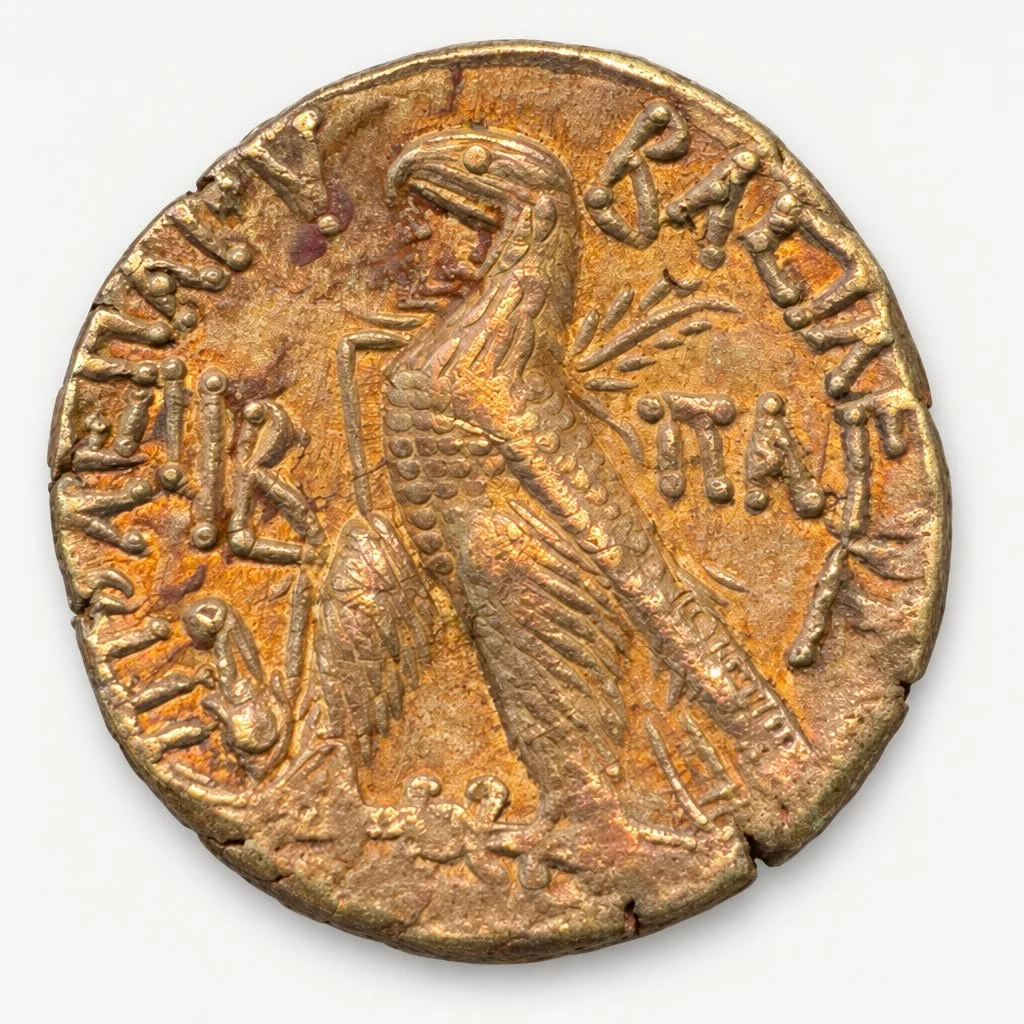 Image 2 of 2
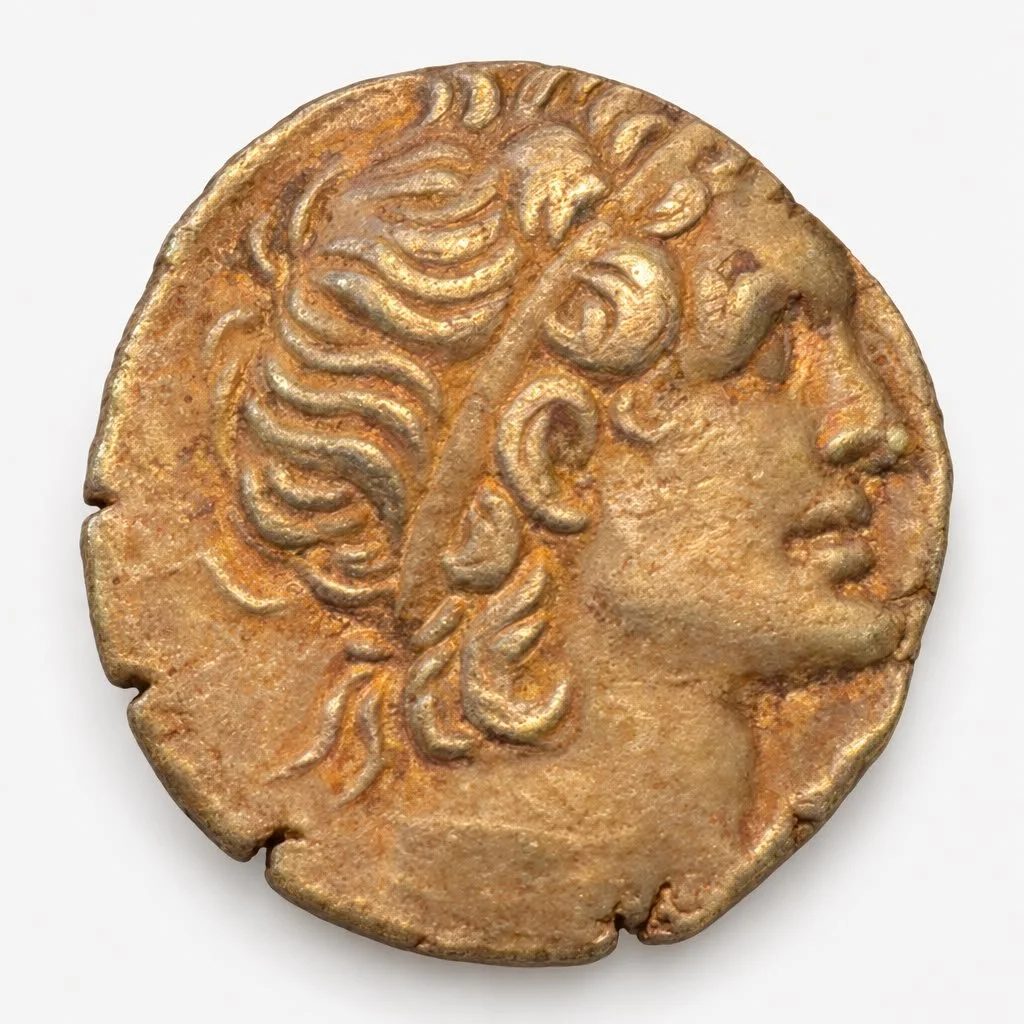
Ptolemaic Kingdom of Egypt, Cleopatra VII Thea Philopator (51–30 BC), the famous last queen of Ptolemaic Egypt. Silver tetradrachm struck at Alexandria, dated regnal year 12 (L IB) = 41/40 BC, the year Cleopatra met Mark Antony at Tarsus. Obverse: diademed head of Ptolemy I Soter, founder of the dynasty, wearing aegis; Cleopatra kept his portrait on her silver coinage rather than her own. Reverse: BAΣIΛEΩΣ ΠTOΛEMAIOY (“of King Ptolemy”), eagle standing on thunderbolt with palm frond, the royal emblem of the Ptolemies; date L IB and headdress of Isis in left field, ΠA monogram right (originally the Paphos mint mark, later copied at Alexandria). Cf. Svoronos 1826; SNG Copenhagen series. Struck in the debased silver typical of the period. Three ancient test cuts on the edge, period bankers’ marks verifying the silver, typical for Ptolemaic tetradrachms. Attractive old-cabinet toning, bold eagle and portrait. Grade: XF (raw, uncertified).
Ptolemaic Kingdom of Egypt, Cleopatra VII Thea Philopator (51–30 BC), the famous last queen of Ptolemaic Egypt. Silver tetradrachm struck at Alexandria, dated regnal year 12 (L IB) = 41/40 BC, the year Cleopatra met Mark Antony at Tarsus. Obverse: diademed head of Ptolemy I Soter, founder of the dynasty, wearing aegis; Cleopatra kept his portrait on her silver coinage rather than her own. Reverse: BAΣIΛEΩΣ ΠTOΛEMAIOY (“of King Ptolemy”), eagle standing on thunderbolt with palm frond, the royal emblem of the Ptolemies; date L IB and headdress of Isis in left field, ΠA monogram right (originally the Paphos mint mark, later copied at Alexandria). Cf. Svoronos 1826; SNG Copenhagen series. Struck in the debased silver typical of the period. Three ancient test cuts on the edge, period bankers’ marks verifying the silver, typical for Ptolemaic tetradrachms. Attractive old-cabinet toning, bold eagle and portrait. Grade: XF (raw, uncertified).