

 Image 1 of 1
Highlights:
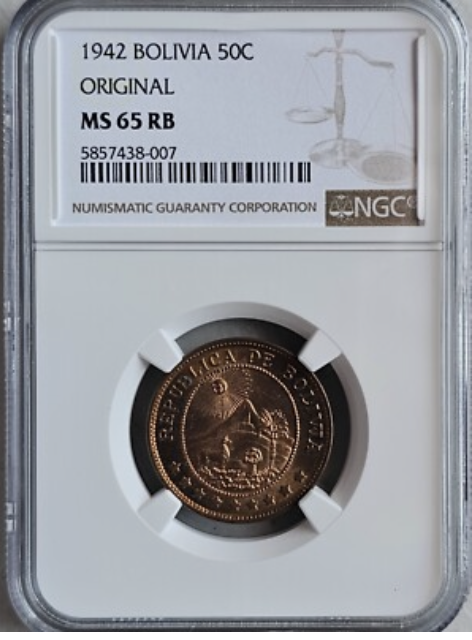
Struck in 1942 under the Republic of Bolivia, catalogued as Krause KM 182a
~5.1 g weight, 24.6 mm diameter, smooth edge
Rich historical motifs: rising sun over mountains, lama, palm and wheat symbols, and central caduceus dividing the face value
Rare in pristine condition; most survivors show wear or heavy toning
Distinguished from many restrikes sold in the market by its quality, certification, and provenance
Why collectors prize this piece:
It bridges art, history, and metallurgy — a snapshot of Bolivia’s decimal coinage era
The MS 65 grade ensures this coin is among the finest survivors
For those who also track mint-error rarities: the 1942 Bolivia 50 Centavos struck on a U.S. war nickel planchet is one of the world’s most unusual off-metal foreign coins (though that is a separate, unique specimen)
If you appreciate coins that combine fine state, historical depth, and aesthetic appeal, this piece is a standout addition to any serious collection.
Highlights:
Struck in 1942 under the Republic of Bolivia, catalogued as Krause KM 182a
~5.1 g weight, 24.6 mm diameter, smooth edge
Rich historical motifs: rising sun over mountains, lama, palm and wheat symbols, and central caduceus dividing the face value
Rare in pristine condition; most survivors show wear or heavy toning
Distinguished from many restrikes sold in the market by its quality, certification, and provenance
Why collectors prize this piece:
It bridges art, history, and metallurgy — a snapshot of Bolivia’s decimal coinage era
The MS 65 grade ensures this coin is among the finest survivors
For those who also track mint-error rarities: the 1942 Bolivia 50 Centavos struck on a U.S. war nickel planchet is one of the world’s most unusual off-metal foreign coins (though that is a separate, unique specimen)
If you appreciate coins that combine fine state, historical depth, and aesthetic appeal, this piece is a standout addition to any serious collection.