

Two assayers, one historic mint, and the closing chapter of a remarkable era in Spanish colonial coinage.
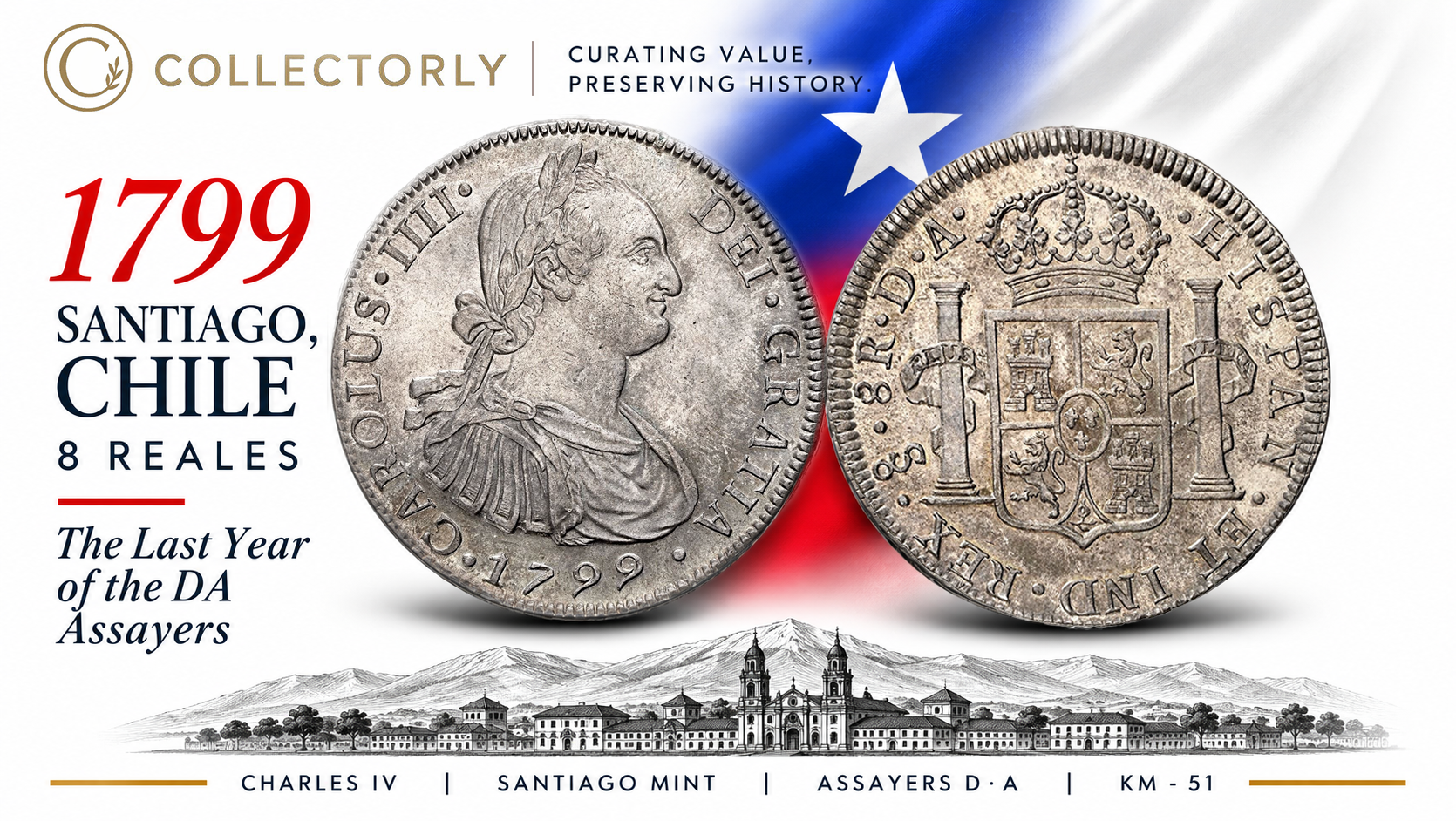
In 1799, the Santiago Mint produced a silver 8 Reales bearing the portrait of King Charles IV and two small initials: D·A.
To the casual observer, these letters might seem insignificant. To the numismatist, they represent the individuals entrusted with safeguarding the integrity of the coinage—and the conclusion of an important chapter in Chilean monetary history.
The 1799 Santiago 8 Reales is not simply a large silver coin of the Spanish Empire. It is a surviving record of the craftsmanship, institutions, and people who shaped the monetary system of colonial South America.
Santiago: A Mint at the Edge of an Empire
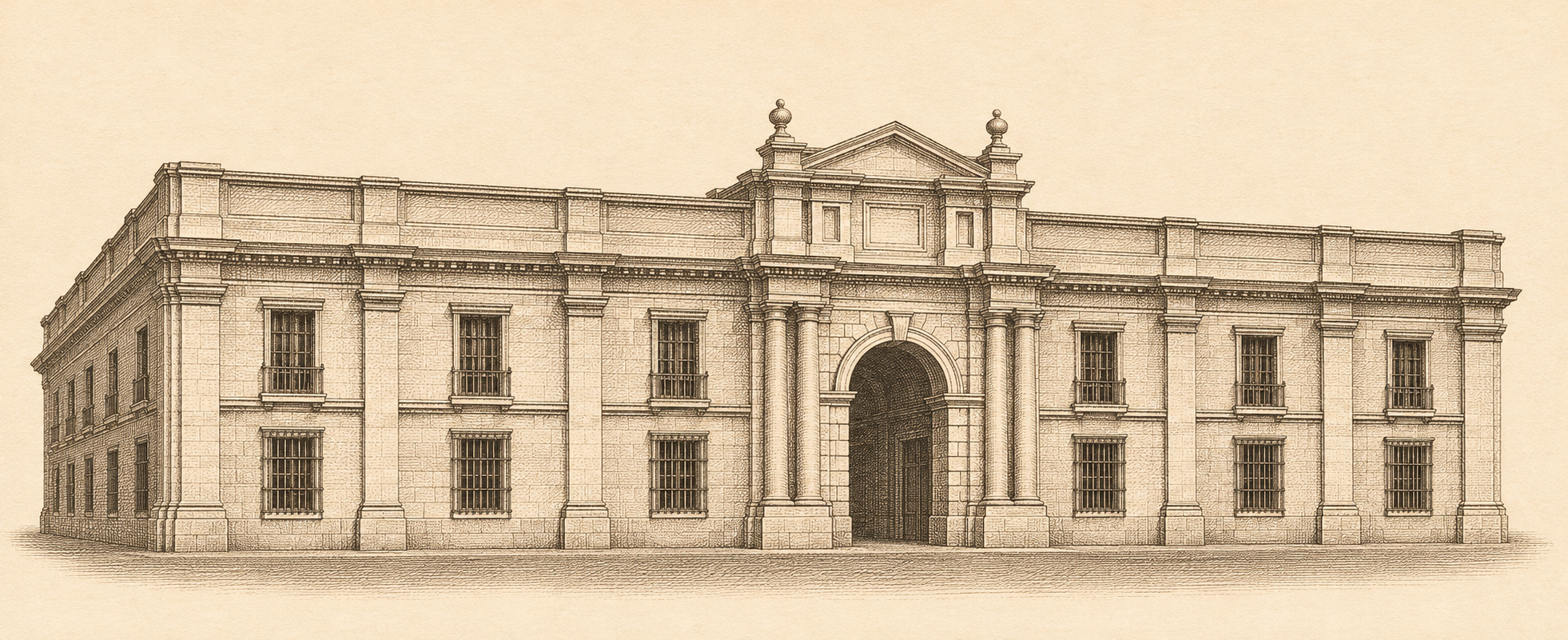
The Royal Mint of Santiago was established in 1743, during the reign of Philip V, as Spain sought to strengthen monetary production in its South American territories.
Before the establishment of local minting, Chile depended heavily on coins produced elsewhere in the Spanish Empire, particularly in Peru.
The development of the Santiago Mint helped establish a more reliable supply of currency for regional commerce and administration.
By the reign of Charles IV (1788–1808), Santiago was producing portrait coinage that followed the monetary standards and royal designs used throughout Spanish America.
Among these issues, the 8 Reales held particular importance. It was a substantial silver denomination that circulated far beyond its place of manufacture.
The Meaning Behind D·A
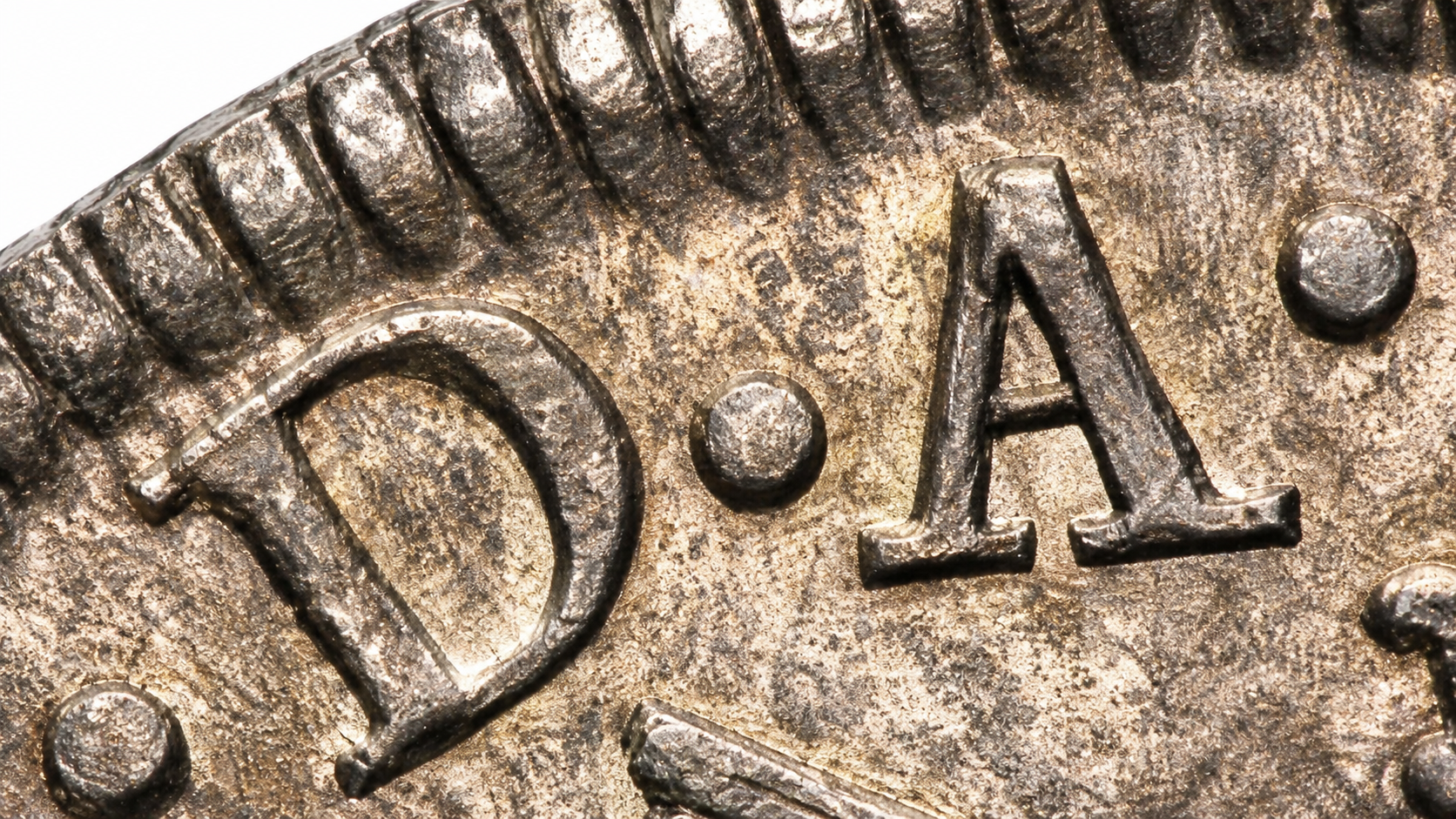
On the reverse of the 1799 8 Reales appear the initials D·A.
These letters identify the assayer combination traditionally associated with Domingo de Eizaguirre (also spelled Eyzaguirre) and Agustín de Infante y Prado.
In the Spanish colonial minting system, assayers played a critical role in maintaining the required fineness of precious-metal coinage.
Their marks served as official identifiers within the mint's system of responsibility and quality control.
The D·A combination appeared on Santiago coinage from 1773 through 1799.
This makes the 1799 issue especially noteworthy: it marks the final year of this long-running combination.
Beginning in 1800, the Santiago 8 Reales carried the A·J initials, signaling a transition in the mint's assayer attribution.
For collectors who study the chronology of Spanish colonial mints, such changes provide valuable historical markers.
A Portrait of Royal Authority
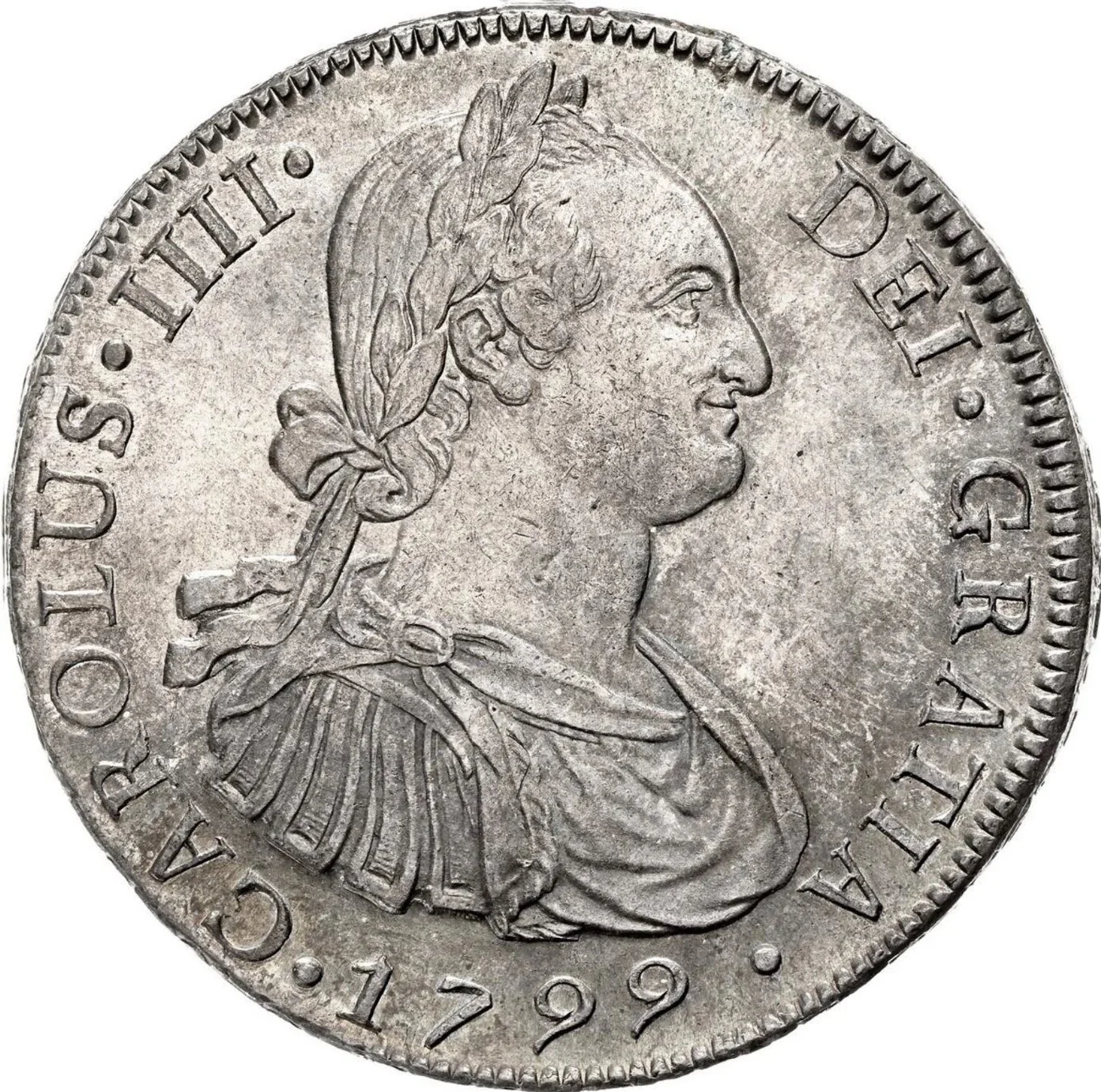
The obverse of the 1799 8 Reales depicts Charles IV facing right, wearing a laurel wreath.
The surrounding Latin inscription identifies the monarch and invokes his authority by divine grace.
The reverse displays the crowned royal arms of Spain, flanked by the Pillars of Hercules and the traditional PLUS ULTRAbanners.
The denomination, mintmark, and assayer initials are incorporated into the design.
These symbols were not merely decorative. They communicated royal authority, monetary legitimacy, and the international identity of Spanish coinage.
Why 1799 Matters
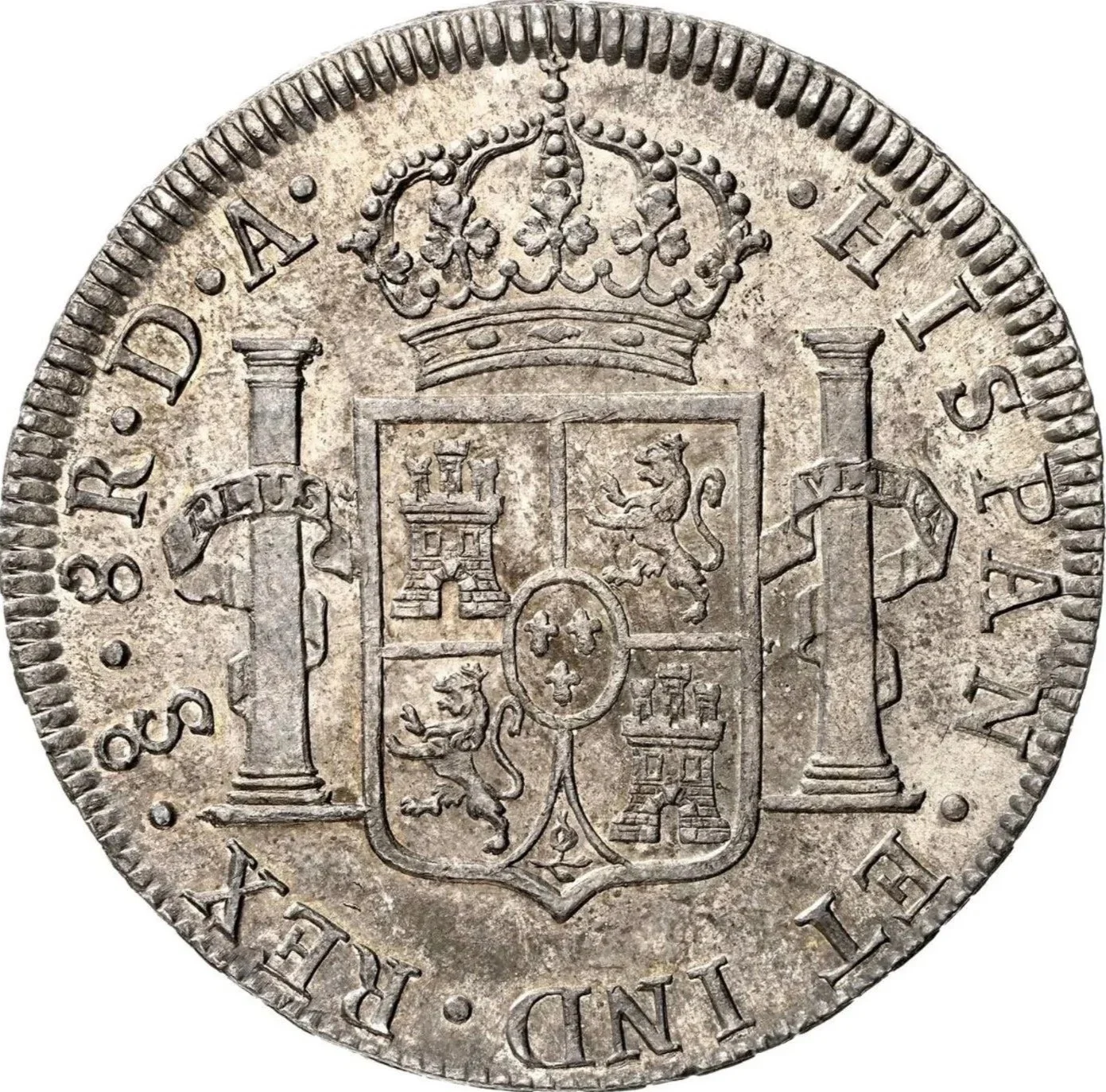
The historical importance of the 1799 Santiago 8 Reales lies in the intersection of its date, mint, and assayer attribution.
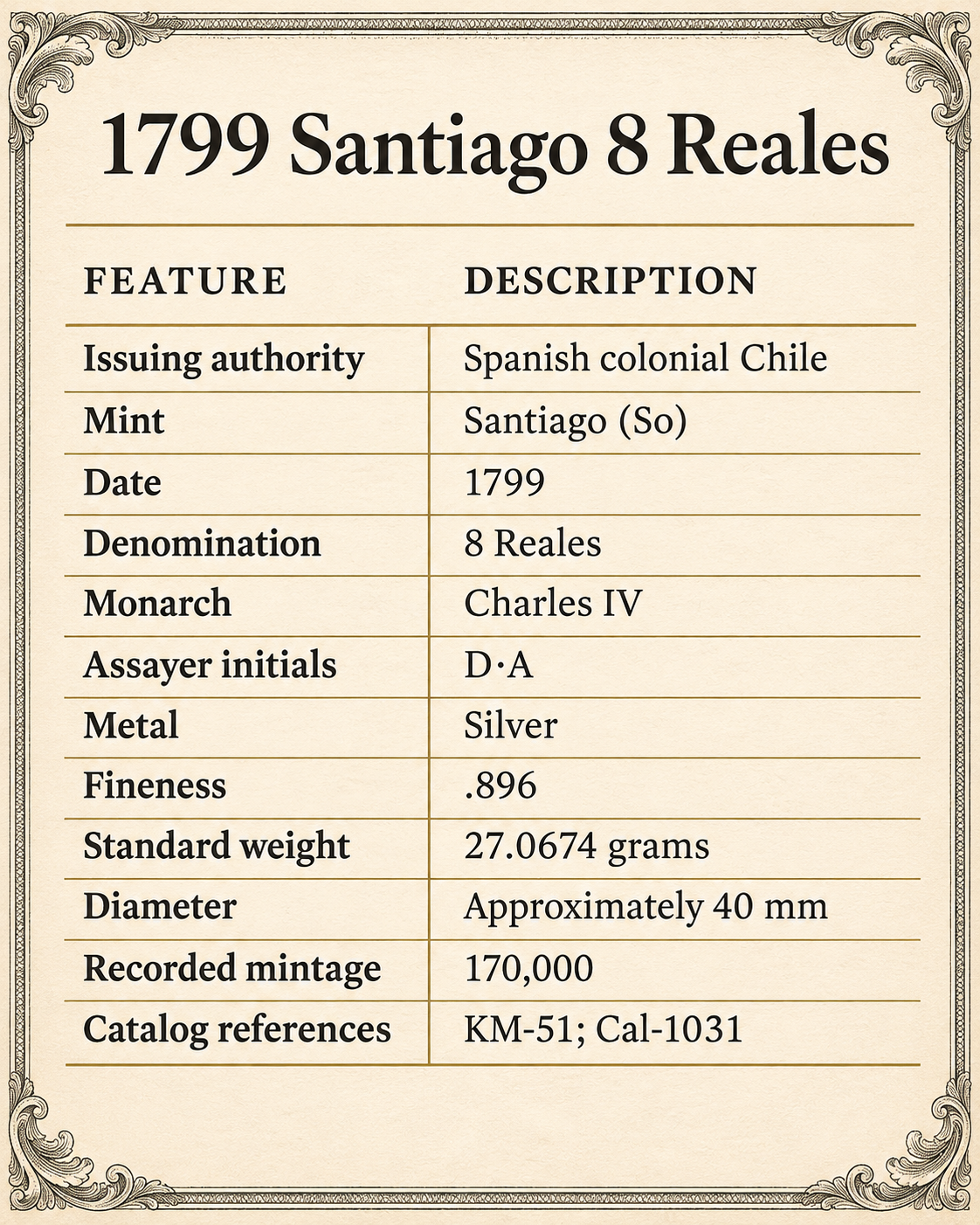
Its recorded mintage was approximately 170,000 pieces, according to published numismatic references.
That figure describes the original production, not the number of coins surviving today.
The issue also belongs to the final years of the eighteenth century, a period preceding the political upheavals that would eventually transform Spanish America.
Within little more than a decade, movements for independence would begin reshaping the region's political and monetary institutions.
The coin therefore represents a moment near the end of an established colonial order.
The Art of the Eight Reales
Beyond its historical associations, the Santiago 8 Reales is an impressive example of late eighteenth-century mint craftsmanship.
Its broad silver surfaces provided space for an intricate royal portrait, detailed heraldic elements, and carefully arranged inscriptions.
Collectors examining these coins often study the completeness of the strike, the preservation of the portrait, the definition of the royal arms, and the character of the surviving surfaces.
Natural patina and original surface preservation can contribute substantially to a coin's visual appeal.
These characteristics also reveal how individual examples have survived more than two centuries of history.
Technical Specifications
From Santiago to the Wider World
The Spanish American 8 Reales played a significant role in the development of international commerce.
Coins produced in colonial mints circulated through networks connecting the Americas, Europe, and Asia.
Their recognizable designs and standardized silver content helped make Spanish colonial silver a widely accepted medium of exchange.
The Santiago issues form part of this larger history, illustrating how even a mint geographically distant from Europe's financial centers participated in a global monetary system.
More Than a Silver Coin
The 1799 Santiago 8 Reales offers a remarkable connection to Chile's colonial past.
Its date marks the closing year of the D·A assayer combination. Its design reflects the authority of the Spanish Crown. Its manufacture demonstrates the technical accomplishments of the Santiago Mint.
For the serious collector, these layers of history are what make numismatics compelling.
A coin becomes more meaningful when we understand the people who produced it, the institutions that guaranteed it, and the world in which it circulated.
At Collectorly, we believe the true value of numismatics begins with understanding and preserving these stories.
Gian Franco Guerrieri
Collectorly — Curating Value, Preserving History
References and Further Reading
NGC / NumisMaster — Chile, 8 Reales, KM-51, Charles IV.
https://www.ngccoin.com/price-guide/world/chile-8-reales-km-51-1791-1808-cuid-1065442-duid-1272380CoinVarieties — Chile 1799-So DA 8 Reales, including catalog references and historical commentary.
https://coinvarieties.com/index.php/Chile_1799-So_DA_8_realesStack's Bowers Galleries — January 2020 New York International Numismatic Convention World Coin Catalog, lot 20227.
https://media.stacksbowers.com/VirtualCatalogs/CatalogLibrary/SBG_NYINC2020_WorldCoin_Catalog.pdfCalicó, Xavier — Numismática Española, historical catalog reference for the Santiago issue.
